This is default featured slide 1 title

Go to Blogger edit html and find these sentences.Now replace these sentences with your own descriptions.

This is default featured slide 2 title

Go to Blogger edit html and find these sentences.Now replace these sentences with your own descriptions.

This is default featured slide 3 title

Go to Blogger edit html and find these sentences.Now replace these sentences with your own descriptions.

This is default featured slide 4 title

Go to Blogger edit html and find these sentences.Now replace these sentences with your own descriptions.

This is default featured slide 5 title

Go to Blogger edit html and find these sentences.Now replace these sentences with your own descriptions.

Tuesday, January 12, 2016

Social Life and Activities of Columbia University

The Engineering curriculum at Columbia is definitely demanding. Equally as demanding is participating in all of the extracurricular activities that might catch your eye. In addition to all of the commonly available activities on college campuses, such as sports-both varsity and intercollegiate-group publications, and student government, there are many active thriving groups on campus. Various cultural groups, which welcome all students, organize spectacular fashion shows, buffet dinners, and dances that are known to sell out. There are also drama, comedy improv, and a cappella groups on campus to help satisfy your yearning to perform.


In addition to activities that offer entertainment and cultural education, there are groups that enable CU students to fulfill their need to help others. The Community Impact programs organized on campus are not only an important part of CU's community but the Morning side Heights community as well, providing tutoring to younger students of the neighboring schools, peer counselling, and numerous other services.


My social life was easily extended beyond the borders of our green campus bounded by the iron gates. The theater is only minutes from campus. Cuisine of almost any culture is only a hop, skip, and jump away. Any music-from classical at Lincoln Center to jazz down in the Village to rock played by various CU bands just across the street at the local hangout-can be heard in a heartbeat. Major sports arenas are just a subway ride away. The abundance of activities available in New York City always left me wishing I could be in more than one place on a Saturday evening.

Financial Aid of Columbia University

Admissions is need-blind for U.S. citizens, U.S. permanent residents, Canadian citizens and persons granted refugee visas by the United States. This means that applications are reviewed without regard to whether students are able to pay for the total cost of attending Columbia.

SEAS is committed to meeting the full need of all applicants admitted as first-year students. Certain limitations apply, however, in the case of transfer students. Although transfer admission is need-blind, financial aid resources for transfer students are limited. Therefore SEAS is unable to meet the full need of transfer applicants, with the exception of students who enter the Combined Plan Program and those who transfer from Columbia College.


The Combined Plan Program for undergraduates offers students from affiliated schools across the country the opportunity to earn both a B.A. in a liberal arts field from their home institutions and a B.S. in engineering from SEAS in five years.

SEAS assesses the information applicants provided to the Office of Financial Aid and Educational Financing to determine how much a family is expected to contribute to college costs. The resulting "family contribution" will include both a "parental contribution" and a "student contribution". If the calculated family contribution is less than the cost of attendance, aid is awarded to make up the difference.


Only students who demonstrate financial need are eligible for financial aid. Except for the unsubsidized Federal Stafford Loan, all institutional and federal aid is need-based. The financial aid package may contain a combination of Federal Stafford Loans, Federal Work-Study, and Federal Perkins Loans.

There are no academic, athletic, or talent-based institutional scholarships. While Columbia students are often the recipients of merit-based scholarships from outside organizations, nothing merit-based is offered directly from the school.

Foreign students should note that the admissions process is need-blind only for U.S. citizens, U.S. permanents resident, Canadian, and persons granted refugee visas by the United States. At this time, financial aid for foreign students who do not fall into one of these categories at SEAS is very limited. However, each year several foreign aid students are admitted to Columbia with a financial aid package that covers one-hundred percent of educational expenses. Because the SEAS community is so small, foreign applicants who need financial aid must be considered on a case-by-case basis; candidates should be aware that such awards may not be possible every year.


Introduction to Connecticut College


If indeed there are ten thousands worlds for the choosing as Cormac McCarthy wrote in All the Pretty Horses, Connecticut College give you access to each of them. The opportunities are endless. Connecticut College students are their own breed-intelligent and inventive souls with a strong commitment to social justice. Fewer than 2,00 students from all parts of the world ( a surprisingly large majority from "outside of Boston") come together to partake in a four-year journey_academic, social, and personal transformations. Connecticut College is a highly competitive coeducational liberal arts college where the classes are like exotic lands of thought that you enter at your own will, the people will be your tour guides. With a tradition of shared governance, social activism, and an Honor Code, it promotes an academically strong socially conscious home base from which to embark on the inevitable adventures to follow beyond the undergraduate years.


Resting on what is referred to as " the hill" in historic New London, Connecticut, the picturesque campus is located halfway between New York City and Boston and overlooks the Long Island Sound. "What college is supposed to look like, " my father remarked the first time when stepped foot on the green. Our eyes widened to the casual gait of students moving from one class to another, tossing Frisbees across the green, and two dozen more students sitting under a blossom tree by the sun dial, engaged in what was their 2:30 P.M. Writing the Short story course. Yes, I felt, this is it.

Connecticut College is committed to empowering students to take charge of their own education;' the faculty works toi provide students with the necessary tools to implement their ideas. My experience with professors goes unmatched. With a student-to-faculty ratio of 10-to-1, I never felt short of attention from professors! It is common for professors and faculty to host students to do everything from watching "Rosewood" and eating nachos, to sitting around a backyard picnic table discussing existentialism, or whether or not our D3 basketball team should make it to this years NCAA basketball tournament.

The Connecticut College education in a nutshell? That is the point: There is no nutshell. Each individual brings a different spark to the campus community. Because of this, there are infinite ways any one students can work to take advantage of oppourtunities such as international study, research with faculty, paid internships, self-designed studies, and community action. While the CC Experience may encompass a set of core values and ideals, opportunities, and experiences each serving as colors on a palette, no one student colors his or her canvas the same. This is the greatest part about CC-you can truly develop yourself as a scholar and as an individual.


Admission Requirements of Connecticut College


Admission to Connecticut College is competitive. Know this: the Admissions staff at Connecticut College seeks bright individuals, and they are cognizant that there is more than one way to reveal this.While CC has experienced an increasing number of applications in the last few years, the "criteria" remain such that any dedicated, thoughtful applicant has the opportunity to compete. Connecticut College is looking for students with passion and with a commitment to pursuing academic excellence through a rigorous academic program and selective travel and work experiences.

Common Application

Connecticut College uses the Common Application. A college application is made with the following basic building blocks: Your biographical information and extracurricular activities, a high school transcript, standardized test scores, an essay, recommendations, and perhaps an interview. In addition, each applicant must submit the Supplement to the Common Application. The supplement is due by December 15 with the Common Application and other Admission materials due by January 1 with notification by April 1. Submission of the SAT Reasoning Test is optional, but all candidates for admission must choose one of the following testing options: results of three SAT Subject Tests or the results of the American College Testing Assessment ( ACT). Beginning with the class of 2010, which marks the introduction of the new SAT with the writing component, either the ACT or two SAT Subject Tests will be required. Submission of SAT scores will still be optional. Interviews are not required but are highly recommended as part of the application process. Interviewers see the conversation as a time to exchange information and personalize what can often seem like an impersonal process to students.

Early Decision

Many of my good friends at CC applied Early Decision. The college offers two Early Decision options, both of which are binding. Early Decision Round I has an application deadline of November 15 with a notification date of mid-December. Early Decision Round II has a supplement deadline of December 15 and all other application materials are the January 1. The notification date for Early Decision Round II is mid-February.

Academic Life of Connecticut College


My vision of college was a nebulous one before my freshman year. I never imagined that "learning" could take place while sitting among my classmates in the living room of one of my professor's houses and discussing issues of the "Other" or the problem of choice in a pluralistic society. I never imagined that so much of my education would be attributed to long talks in dorm hallways late at night while procrastinating challenging assignments. And I surely never imagined that my college experience would endow study abroad or work experiences in a dozen different countries.

Distribution Requirements

Take the liberal in liberal arts college seriously. Students choose from fifty-five major with the option of self-designing a major as well. Yet that's not to say that the academic program falls anywhere short of demanding and powerful. Connecticut College's academic program withing the major is extensive with its requirements. In addition, there are seven General Education requirements (seven courses from seven different academic areas), a language requirement, and a writing across the curriculum requirement.

Students must take a foreign language course at the intermediate level or study a new language for two semesters. Placement at the intermediate level is achieved by passing a college-administered oral and written proficiency exam during orientation. I found that many students took advantage of the plethora of language study programs and services offered by the college (see Study Abroad section).

Connecticut college students have the unique opportunity of applying to a number of centers and programs that are designed to integrate a student's major with a service project domestic or international internship, intensive science research, or other technological advanced research project. This hands-on experience is designed to complement curriculum with practical experience often reserved for graduate students at larger academic institutions. Basically, of all the competitive colleges and universities I looked at as a senior in high school, not one offered such distinct, creative opportunities as the ones described below.

Some people consider spending a semester or a summer in New York City as an international experience. In many ways I found this to be true while interning at Ms. Magazine in downtown Manhattan for a summer. Professor Blanche Boyd in the English Department and the Office of Career Services helped me earning world ( or at least I was trying it out), and I had research deadlines and editorial meetings where Gloria Steinem would frequently make an appearance. I learned as much from her as I did from the incredibly brilliant staff of women working at Ms. They answered questions  hadn't even proposed yet about the world.

The Toor Cummings Center for International Studies and the Liberal Arts (CISLA)

A Connecticut College gem is its Toor Cummings Center for International Studies and the Liberal Arts, a program to which students apply in the fall of their sophomore year to work toward completing an integrative research project relative to their major. The center funds an international internship the summer before the senior year. In addition, students are required to complete two International Studies courses, with a focus on the following questions: What are the origins and dynamics of contemporary society? What is the relevance of the past in understanding the present and the possibilities of the future? What are the material, spiritual, and ethical challenges of modernity?

The Toor Cummings Center for International Studies and the Liberal Arts is indeed one of the most highly regarded international studies programs in the country. Officially, it aims for its students to leave prepared for a lifelong reflection on study and learning as a journey to wisdom that one shares with others. Unofficially, it is the coolest program at Connecticut College. The plethora of independent research projects can include conducting environmental field research in Bali, researching media studies while interning at CNN in Berlin for a summer and examining the effects of Amnesty International's human rights work in Santiago, Chille. These experiences, combined with the solid academic foundation of a liberal arts college, in addition to the large realm of study and work experiences in all parts of the world, surely make for profound, diverse classroom discussions.

The most challenging and rewarding experience I had as a Connecticut College student, by far, was my  CISLA internship. As a member of the Center for International Studies and the Liberal Arts, I was able to complete by international internship at the United Nations Development fund for Women (UNIFEM) in Lagos, Nigeria, where I interviewed women and wrote articles on the various projects that UNIFEM implements in Nigeria and Ghana.

In short, I had a dream internship. Monday through Friday, my host family's driver would take me to the United Nations headquarters in Lagos. The actual drive was a whirlwind of smoky cars, motorbikes, woman holding baskets on their heads, babies crying, kide skipping, adults standing in line at the various European and American embassies, lethargic policemen in military uniforms, and then occasional homeless people on the street asking for money or food. By the time I got to work, my mind was already full. I signed in every day and was handed an " Official Consultant" badge ( I never got used to the idea ). Nonetheless, I worked at UNIFEM.

Amazed at how the UNIFEM-Lagos team ( a staff of eight people) was able to balance friendliness and professionalism in their day-to-day work schedules, I felt immediately comfortable in the work environment. I shared an office with one of the Program Officers, and fortunately I was supplied with a laptop. On my first day at work the Regional Program Director (my Boss) said to me,"So why don't you look through the UNIFEM literature that we have and then make a list of stories you want to write about, people you'd like to interview, and then make a time table for it all-oh and be specific, work on what you're interested in, because frankly, I don't want to waste your time". And so the summer began. 

Social life and Activities of Caltech


Tech is not full of people who lock themselves in their rooms and study. There is something for everyone here. Plenty of people go out clubbing on the weekends, and yet these are the same people who do interesting summer research in cutting-edge fields like quantum computing.

Houses
Social life is generally not one of the reasons a high school student chooses Caltech, but every year, freshmen are surprised to find an active social scene centered around the seven undergraduate houses. Blacker, Fleming, Lloyd, Page, Ricketts, Dabney, and Ruddock House are descendants of fraternities  that dominated the campus in the 1920s. This fraternity lineage is most obvious at family-style house dinners each night. Students waiters set the tables, serve food, and refill drinks; everyone must ask permission to get up from the table, and dinner ends with announcements from the house officers. Dinner is certainly not a formal affair though; each house adds its own quirky rules; for example: no "nerd talk," and no freshmen sitting at corners. Breaking the rules results in a variety of interesting punishments and the nightly ritual serves as an entertaining diversion that makes each house seem more like a family.


During the first week of classes each year, freshmen are assigned to houses in a process known as rotation. A toned-down version of a fraternity rush, each freshman visits each of the seven houses and submits a list of preferences at the end of the week. Upperclassmen from each of the houses then get together and assign each freshman to a house in an all-night meeting. The end of rotation marks the beginning of a week of initiations, when freshmen can be found trading water balloons, and moving furniture across campus at the request of upperclassmen, this gives freshmen their first taste of Caltech pranking and after this shared experience, each house is drawn together as a tight community. 
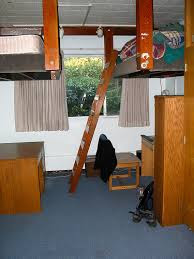
Caltech Dorm houses

The houses are microcosms within Caltech. There are enough different personalities within the houses that almost everyone can find someplace to fit in. I have found that the house system is a wonderful way to establish a family-like support network. Even from the beginning, I have felt like I was a part of what was going on and that people cared about what was going on in my life.

Getting into a house gives each freshman an instant circle of friends and a constant source of social activity. Each house hosts one large "inter house" party during the year, as well as many smaller parties. Every house elects a social team that plans other events such as ski trips, concerts, and trips to various L.A. tourist locations, but most social activity isn't incredibly organized. Nightly, students can be found relaxing and socializing in tech common areas of the house, getting to know the group of people who will be their neighbors for four years.

Athletics

While academic competition is almost nonexistent, the seven houses engage in constant competition through a year-round schedule of inter-house sports. The houses play softball, soccer, swimming, track, basketball, Ultimate Frisbee, and football, earning points for compiling the best record in each sport. the house with the most points at the end of the year wins the inter-house trophy. The games are competitive, but everyone gets a chance to play­­­­­. Eighty-five percent of students play in inter-house sports before they graduate.


Intercollegiate sports are open to almost any student who can commit to daily practices, and almost thirty percent of the student body plays on Caltech's eighteen NCAA, Division III teams. There is cross-country, soccer, basketball, baseball, fencing, and more, but for over a decade now, no football team. There are also a wide variety of physical education classes for students to fulfill their PE requirement, ranging from traditional sports to yoga, scuba diving, and rock climbing.

Other Activities

Many Caltech students happen to be talented musicians, so the school sponsors a variety of music and arts programs. There is a concert band, two jazz bands, chamber music, a symphony orchestra, men's and women's glee clubs and a theater program that performs three shows every year. A growing number of art programs at Caltech are now being organized by students. There are several a capella groups, multiple rock bands, dance troupes, and a literacy magazine, all run entirely by students.


Just because we're a small school doesn't mean we don't have talented musicians or poets or athletes or actors. It just means people came here to do science. Academics are rightly going to come first, but when people make time for extracurricular, they typically put their souls into them. I've been singing in choirs since elementary school, so when I had some time in my schedule I signed up for the woman's glee club. It's great! where else on campus do you see 45 women, ranging from undergrads to faculty and staff to members of the community, all together? We're not just talking about singing here__ the women's glee club is a force, a sisterhood, a philosophy lesson on living people tend to stick with the club for all four years, so you make many friends. Not only is it a time to socialize; it challenges you in other ways. You learn with a different part of the brain, and it revitalizes that creative side.

These groups are just a sampling of more than ninety student clubs on campus that's one club for every ten students! Caltech students run a cheer-leading squad, chess tam, entrepreneur club, student investment fund, amateur radio club, science fiction club, ethnic organizations, religious groups. and many more. Recently, a group of Caltech students started an undergraduate research journal that is now distributed at numerous universities across the country. 

Whatever you want to do, Caltech will always be very understanding and supportive. If you're interested in extracurricular activities, it's simple to get involved in clubs or student government. If you're interest in sports, you can participate on a team or just play recreationally in inter-house sports. If you have a hobby that isn't already at Caltech, you can easily start a new club, since there are so few students, one person can make a big difference. While I've been here, I've seen students start an undergraduate research journal, a cheer-leading squad, and a community service group that didn't even exist when I was applying.

Student Government

All these clubs operate with little or no oversight from the faculty or administration and are an example of Caltech's long tradition of student self-governance. Many aspects of this self-governance have been alluded to elsewhere in this essay, and it is an integral part of student life at Caltech. Student government bodies decide who lives in the dorms, discipline students in cases of cheating, fund the majority of student activities, and choose representatives that help read admissions applications.


Students government is centered around a non-profit organization known as the Associated  Students of Caltech (ASCIT), Inc. Completely independent of the Institute, ASCIT publishes the student newspaper, yearbook, student handbook, and literary magazine. ASCIT is also in charge of administering the Honor System: suspected cases of cheating are investigated and adjudicated by the Board of Control, a committee of twelve students. Student representatives, along with faculty members, also sit on the Conduct Review Committee, which rules on disciplinary matters for undergraduates. Those students are just a few of the more than sixty student representatives on various Caltech committees that review academic policies, set the dinner menu, make admissions decisions, award merit scholarships, and determine academic ineligibility, to name a few examples. Caltech students are allowed to participate in almost every administrative decision that affects student life, which is a rare privilege in the present-day big business of higher education.

Traditions


This level of influence allows students a high degree of independence from Caltech administration. Over the years, students have been able to shape their own unique way of life without much administrative interference. This has created many quirky traditions, one of the wackiest being senior Ditch Day, which was featured on the Tonight Show's "Jaywalking" in the summer of 2002. One day every May, all the seniors ditch their classes and leave campus. Many years ago, underclassmen began to prank senior's room while they were gone. The seniors countered by "stacking" their rooms, creating barriers to keep students from getting in on Ditch Day. Over the years, these stacks have become more elaborate, and now most take the form of an all-day scavenger hunt, where students run around campus collecting clues that will unlock the senior's rooms. The institute has relented to the students, and now cancels classes every year for Ditch Day. Every year, this creates some unexpected sights, which can really be understood only by those going through it. Ditch Day is somewhat representative of the entire student experience at Caltech; it is quirky and unpredictable, and is exactly what Caltech students enjoy.

Financilal Aid of Caltech

I knew that Caltech would be expensive, but the good thing is that Caltech's price tag includes everything: tuition, room and board, student fees, health insurance, money for books, extra meals, and personal expenses, even travel money if you live far away. There aren't any hidden costs.


Caltech financial aid has long held to a simple policy: "If you are an admitted student whose family has insufficient financial resources to pay for all or part of your educational expenses, Caltech will provide you a financial aid award that will meet Caltech's calculation of your financial need and so make it possible for you to attend." This has created a tradition of Caltech providing unparalleled opportunities to excellent students, regardless of their families economic circumstances. 

Applying for first-time financial aid is a simple process that mirrors that of other universities. Every applicant must fill out the Free application for Federal Student Aid (FASFA) and the College Scholarship Service (CSS) Financial Aid PROFILE Application. These documents enable the Financial Aid Office to determine the amount that the student and his or her family can reasonably be expected to contribute toward a Caltech education. Any difference between that amount and the cost of attending Caltech is considered the student's financial need, and the  Financial Aid Office will prepare a student aid package consisting of a combination of scholarships, grants, loans, and work study that will fully meet that need. The sum of a student's contribution along with the financial aid award covers the entire cost of attending Caltech: tuition, room and board, student fees, health insurance, money for books, extra meals and personal expenses, even travel money if you live far away. There aren't any hidden costs.

Caltech tuition is already well below the cost for its peers, but the Financial Aid Office makes the additional effort to make it affordable for everyone. Most students are very satisfied with their financial aid package.

Caltech strives to be fair and generous with its financial aid. A student's financial standing never factors into the admissions decision. The admissions process is completely "need blind" for domestic students and applications are evaluated separately from financial aid applications. Caltech also never uses financial aid as a bartering tool to attract students. All awards are based on need alone, and no award will ever be increased to match an offer from another school. If a student receives an outside scholarship, it will go toward reducing a student's loan or work study, rather than reducing scholarship or grant awards. If a student's financial circumstances change, Caltech is very willing to reevaluate the family's current, revised financial status.

Work-Study


Many students receive federal work-study as part of their financial award, and it is very easy to find opportunities to work on campus. The number of job opportunities far out numbers the number of students on campus. The Financial Aid Office is very flexible with switching between loans and work-study, and many student work off a significant portion of their costs before they graduate. Some of the best-paying jobs are research assistant and teaching assistant. Students can also earn work-study by performing community service such as tutoring, reading to kids, or feeding the homeless. Other students work as office assistants, tour guides, ushers, or waiters. Many of these jobs have very flexible hours and pay reasonably well.

Scholarships


Caltech gives many scholarships that are need-based, but in recent years, several donations have allowed Caltech to give limited number of merit-based scholarships to incoming freshmen. These merit awards come in a range of values. There is no separate application for the merit awards; all admitted students are automatically considered. There are also a number of upper class merit awards given to sophomores, juniors, and seniors on the basis of academic excellence. These awards cover up to the full cost of tuition, and the Scholarships and Financial Aid Committee awards them to many outstanding continuing students each year.

Graduates

Thirty-two Nobel Prizes have been awarded to Caltech alumni and faculty. A Caltech education primes students for a career in scientific research, and a majority of graduates follow that path. On average, about half of Caltech graduates go on to earn a Ph.D., which is a significantly higher percentage than any other university. These are the students that Caltech is designed for-those who will dedicate their lives to the study and teaching of scientific knowledge. Caltech graduates are very successful in computing for fellowships and more than twenty each year win national and international awards.

Most freshmen enter Caltech dreaming of a professorship or a career in scientific research, but by the time graduation comes around, many find their interests are elsewhere. These students go into a variety of fields they never considered when they were in high school.

About twenty-five percent of graduates each year go straight into the workforce. Even when the economy is down, Caltech students don't have much trouble finding excellent jobs. More than one hundred companies recruit on campus each year; in a recent year graduates received offers that averaged about $61,000 and several graduates received offers in excess of $80,000. Most job offers come from the engineering and computer science industries, but an increasing number of recruiters come from the financial sector, insurance industry, and management consulting firms. More and more companies have found that the problem-solving skills, technical background, and mathematical ability of Caltech graduates apply to a wide range of activities.

This still leaves a group of graduates that doesn't fit into a particular mold. Although Caltech does not have a premedical program, each year graduates get into the top medical schools and go to earn M.D.s. A growing number of graduates are applying to law school even though there are no prelaw majors. A few students each year joint he Peace corps, travel around the world, go into teaching, or start their own businesses. The rigorous education that Caltech provides does more than train students for scientific research; it teaches skills that are valuable in almost any field.

To graduate from Caltech is to be part of an elite club of a little more than 20,000 living alumni. As an extension of the intimate culture of Caltech, the alumni network is very close-knit and supportive. Many Caltech alumni look to hire other alumni, and all are happy to help in job searches or provide business contacts. Many graduates find their way back into the Caltech community; twenty-five current faculty members their undergraduate degrees at Caltech.